

Ace Marketplace
Designing a unified dealership operations platform across mobile and desktop
Ace Marketplace is an end-to-end dealership management system built to streamline operations across service, rentals, vehicle tracking, and administration.
The platform supports multiple roles and workflows, from frontline staff managing vehicle check-ins to administrators configuring system-wide rules.
The goal was to bring fragmented operational tools into a single, cohesive system that improves speed, clarity, and decision-making.
Problem
Dealership operations were fragmented across multiple tools, systems, and physical touchpoints.
Service advisors, drivers, and managers had to move between:
scheduling tools
vehicle tracking systems
spreadsheets
manual coordination (calls, walkarounds)
There was no single source of truth for:
where vehicles were
who was responsible for them
what stage they were in
This led to constant context switching, delays, and operational blind spots, especially during peak hours.
Approach
Unify fragmented workflows into a single operational system
Ace Marketplace was designed as a combined hardware + software solution that brings all dealership operations into one environment.
Instead of layering on another tool, the goal was to:
Consolidate scheduling, tracking, and logistics into one system
Create a shared source of truth across all roles
Reduce reliance on manual coordination
Design interfaces that support real-time, high-volume decision making
The focus wasn’t just usability, it was operational clarity at scale.
Solution
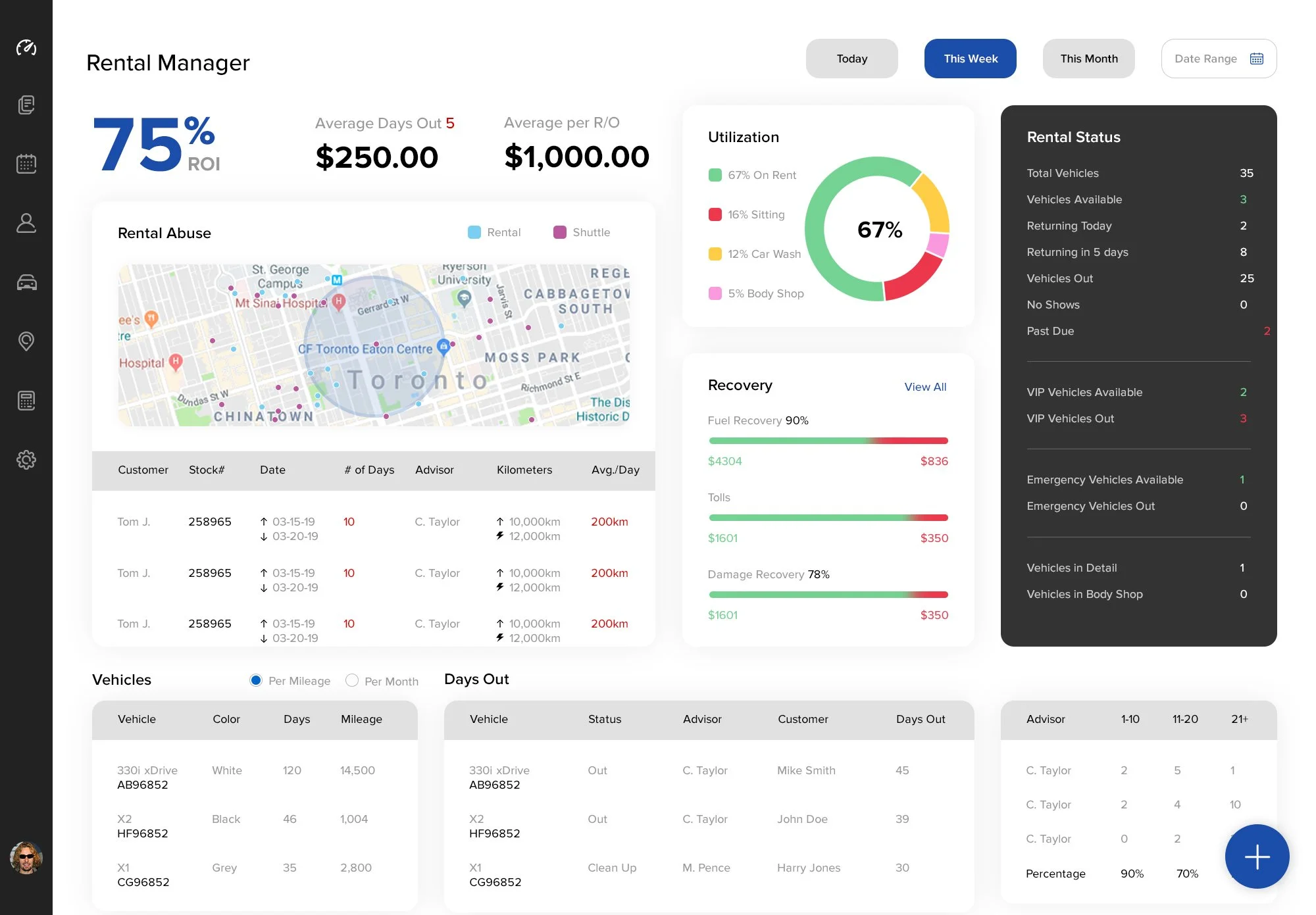
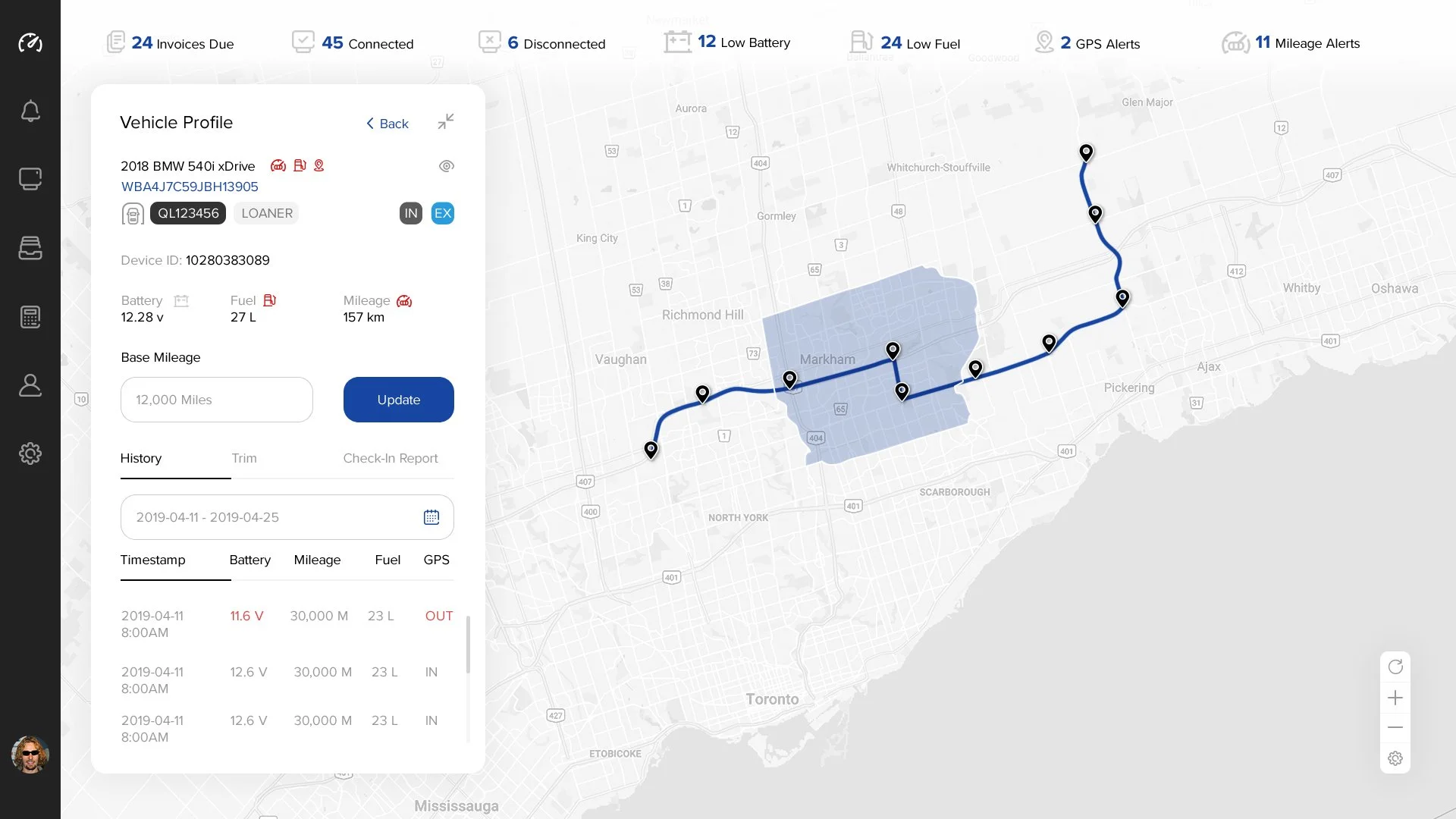
Unified Operations Platform
A modular system that connects key dealership workflows into one experience:
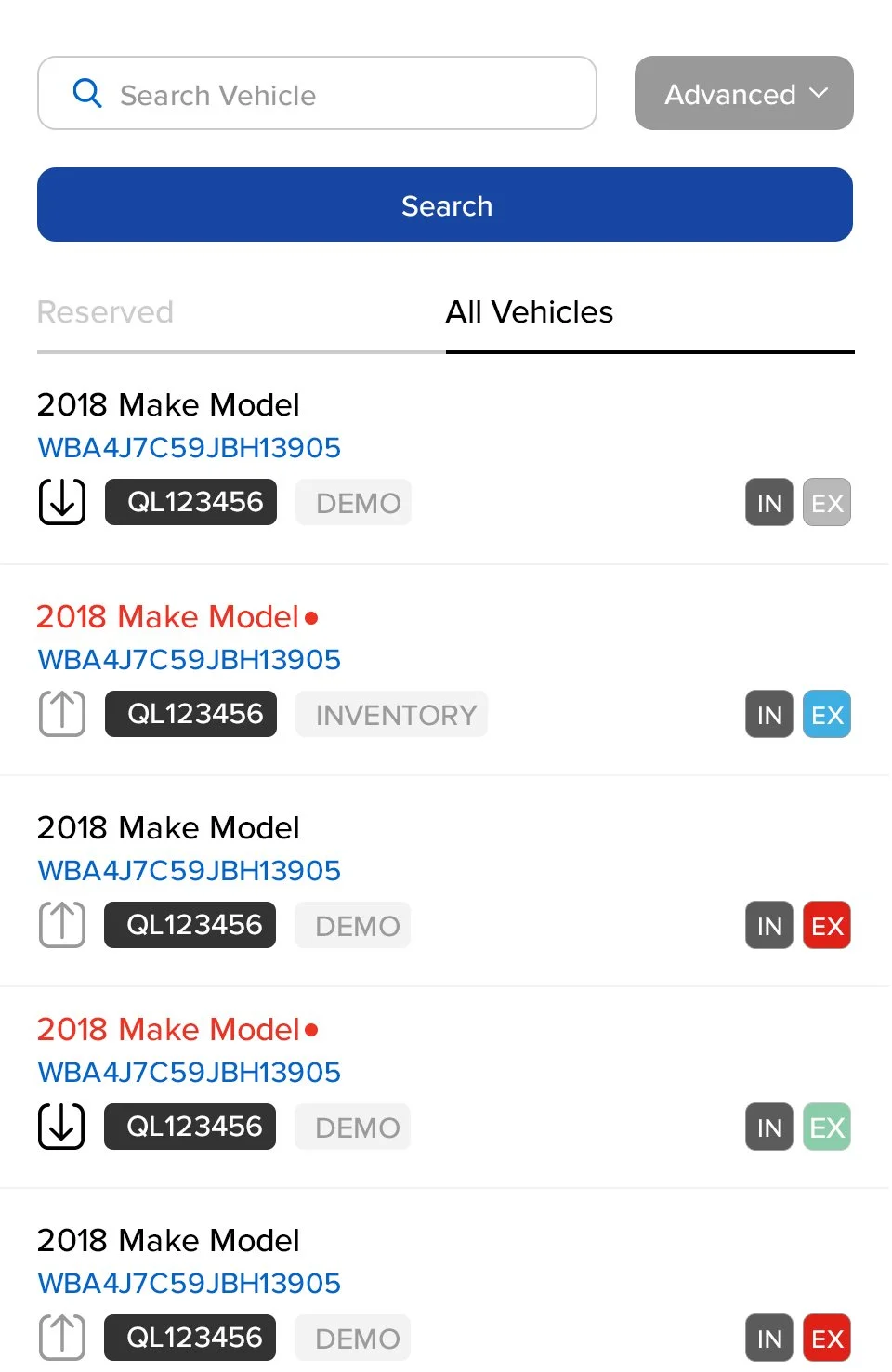
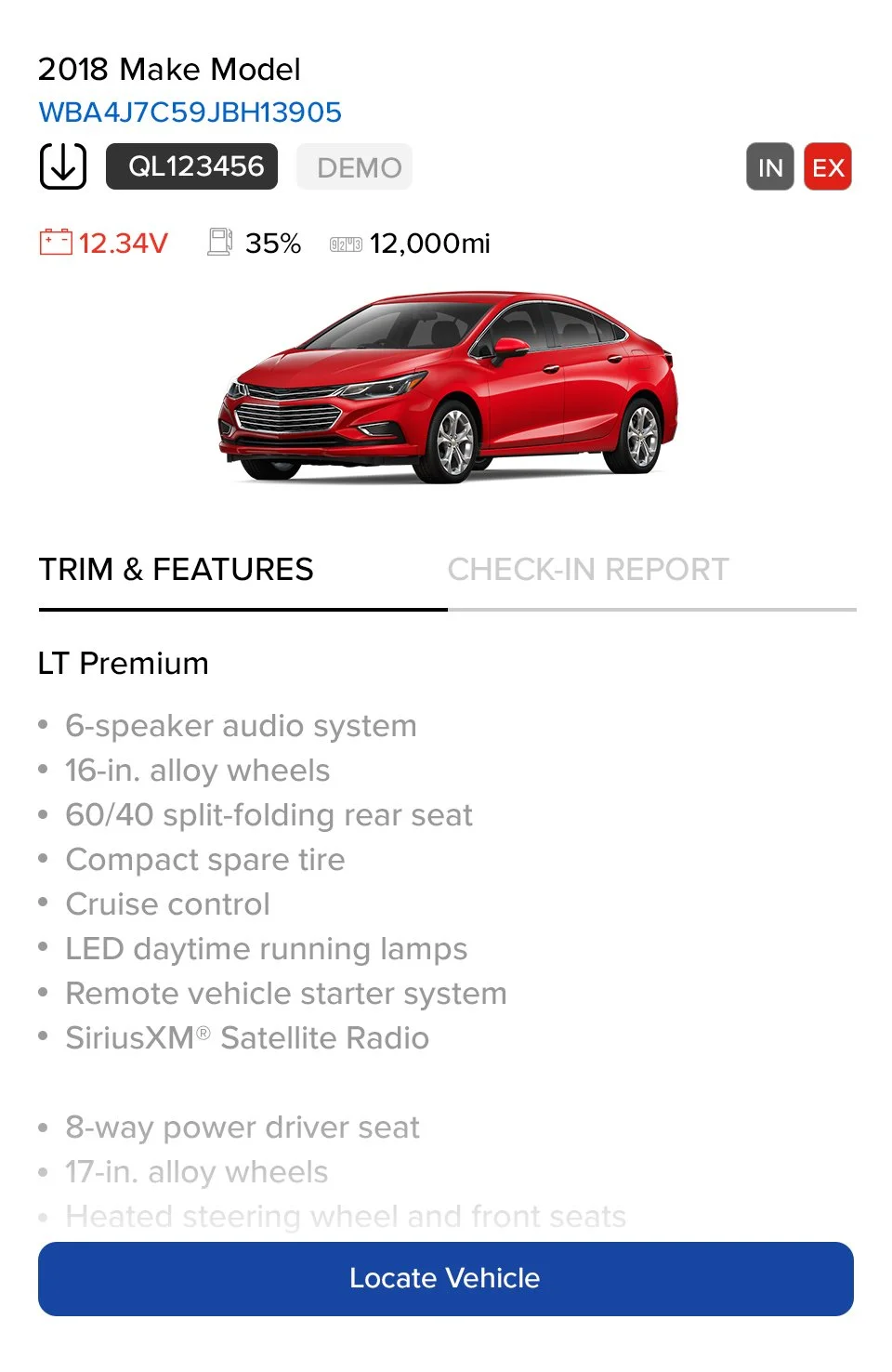
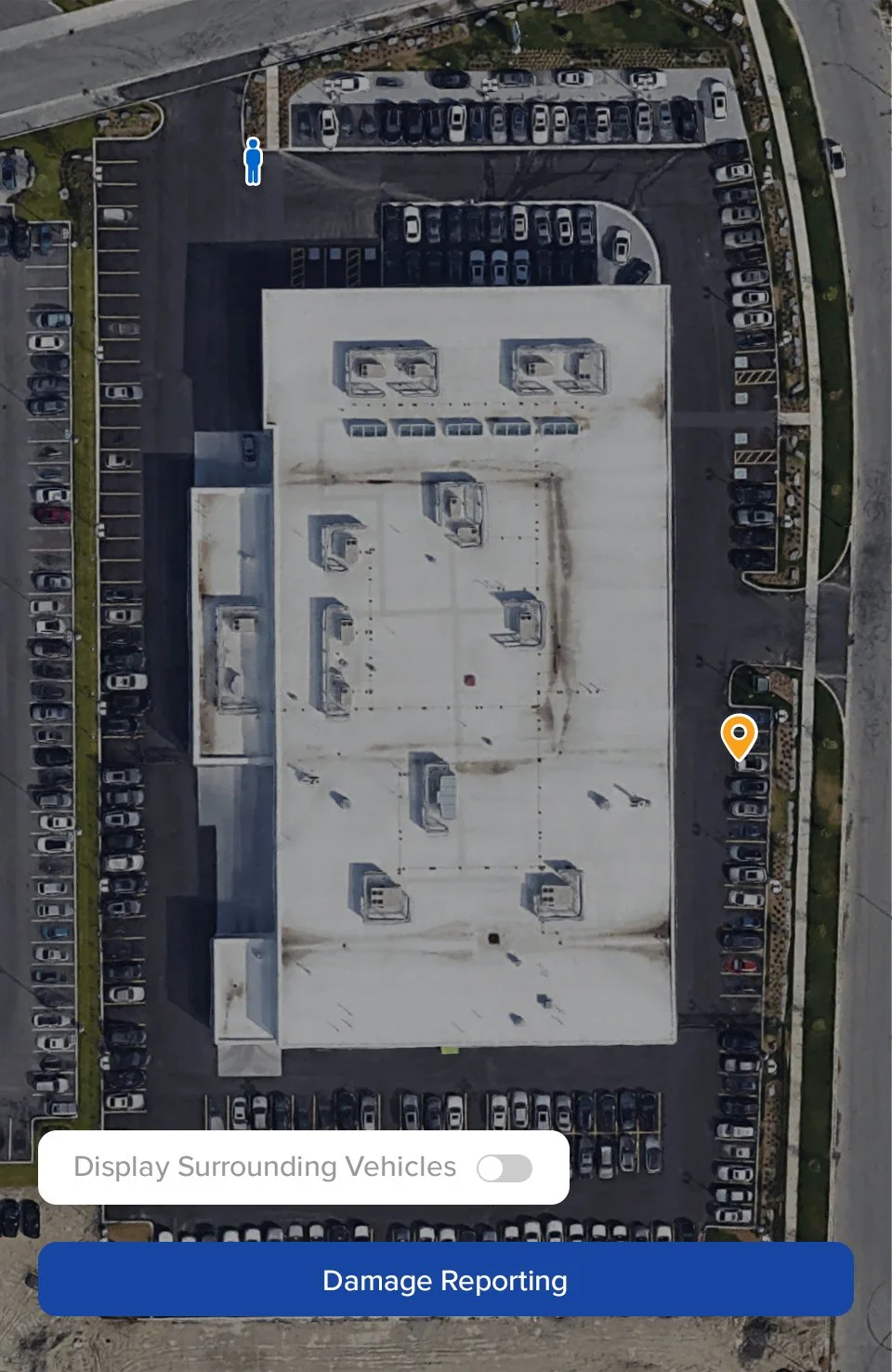
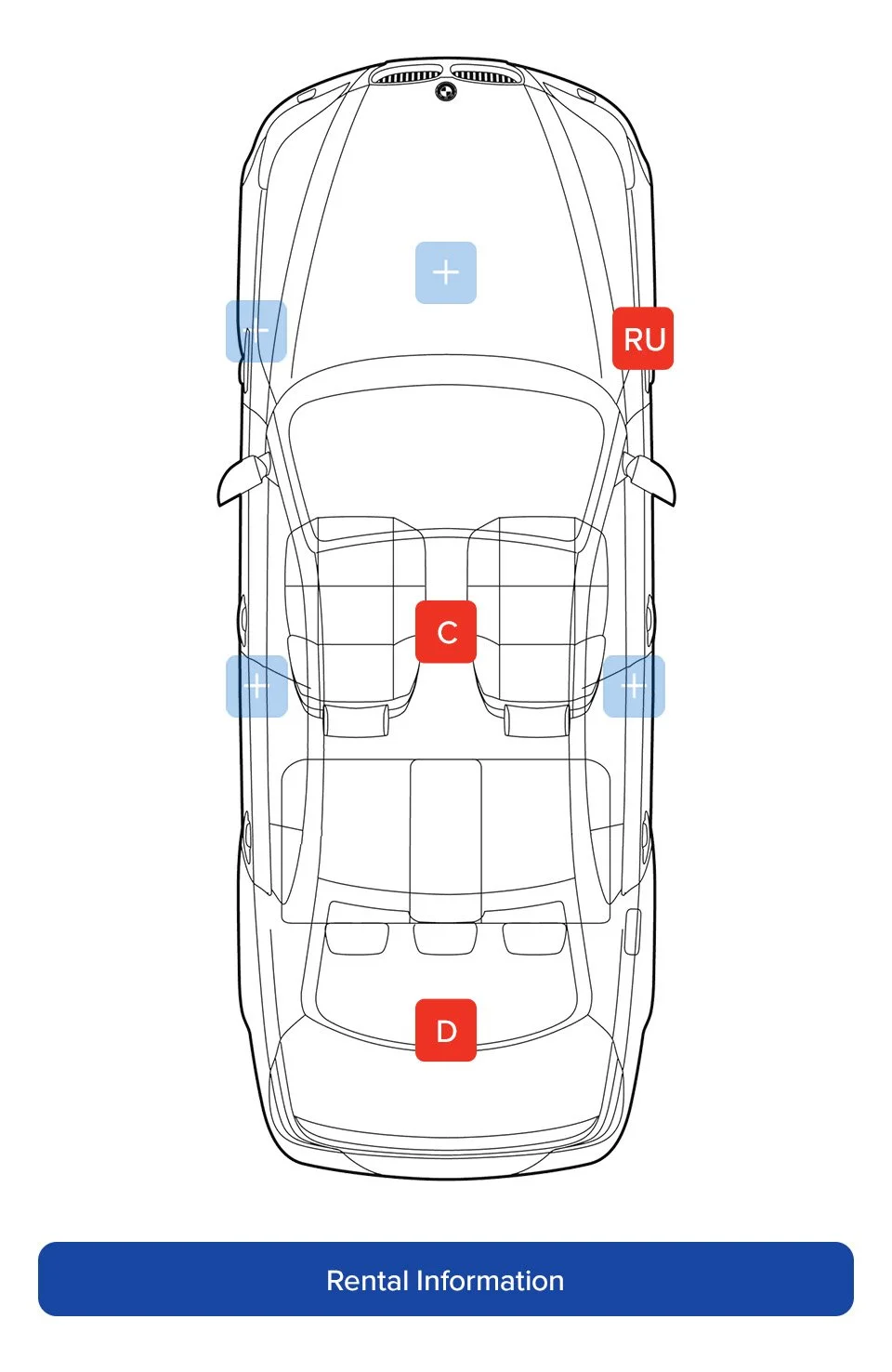
Vehicle selection and assignment
Rental lifecycle management
Service scheduling and tracking
Real-time vehicle location
Admin configuration tools
This replaced fragmented processes with a cohesive operational flow.
Guided Rental Flow
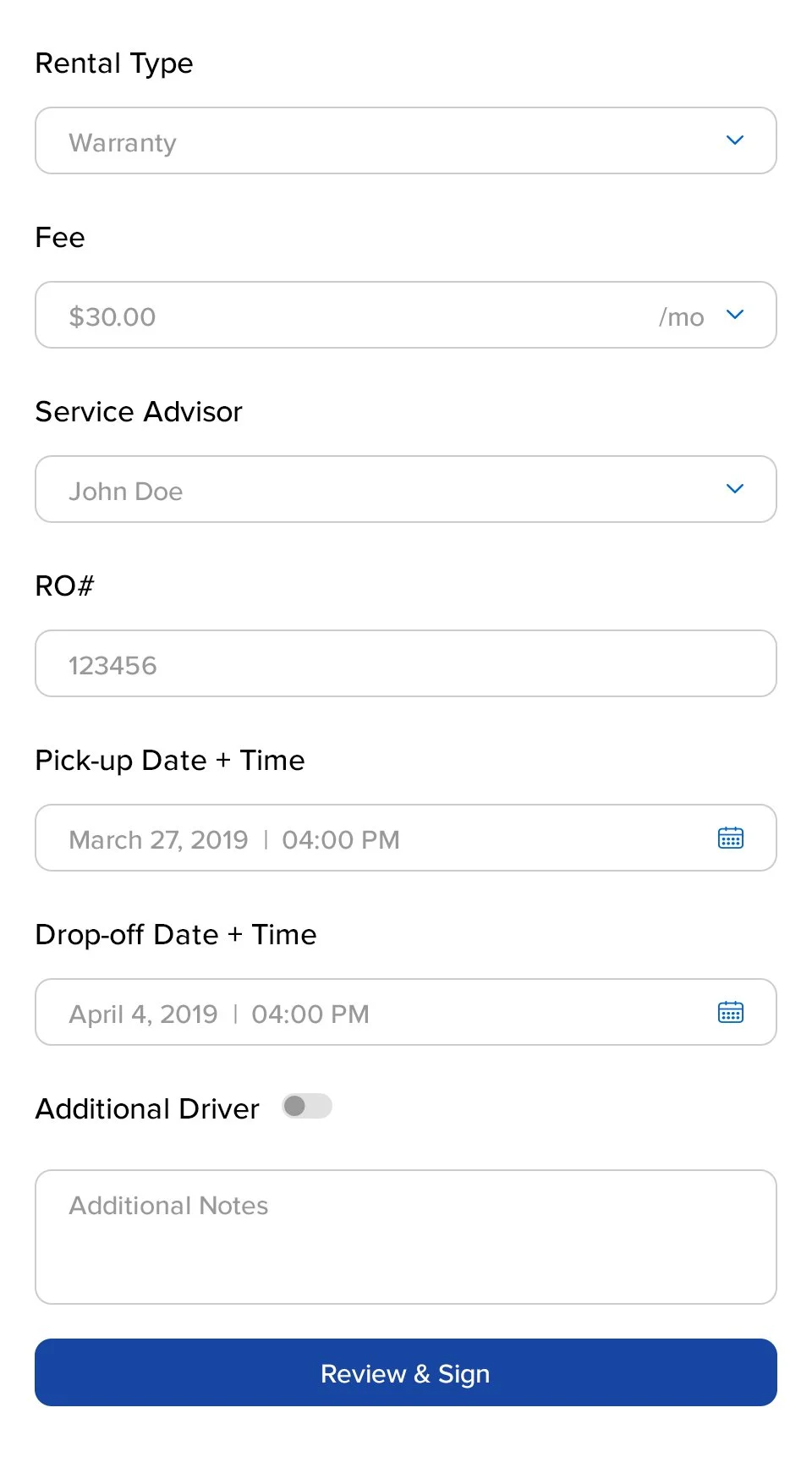
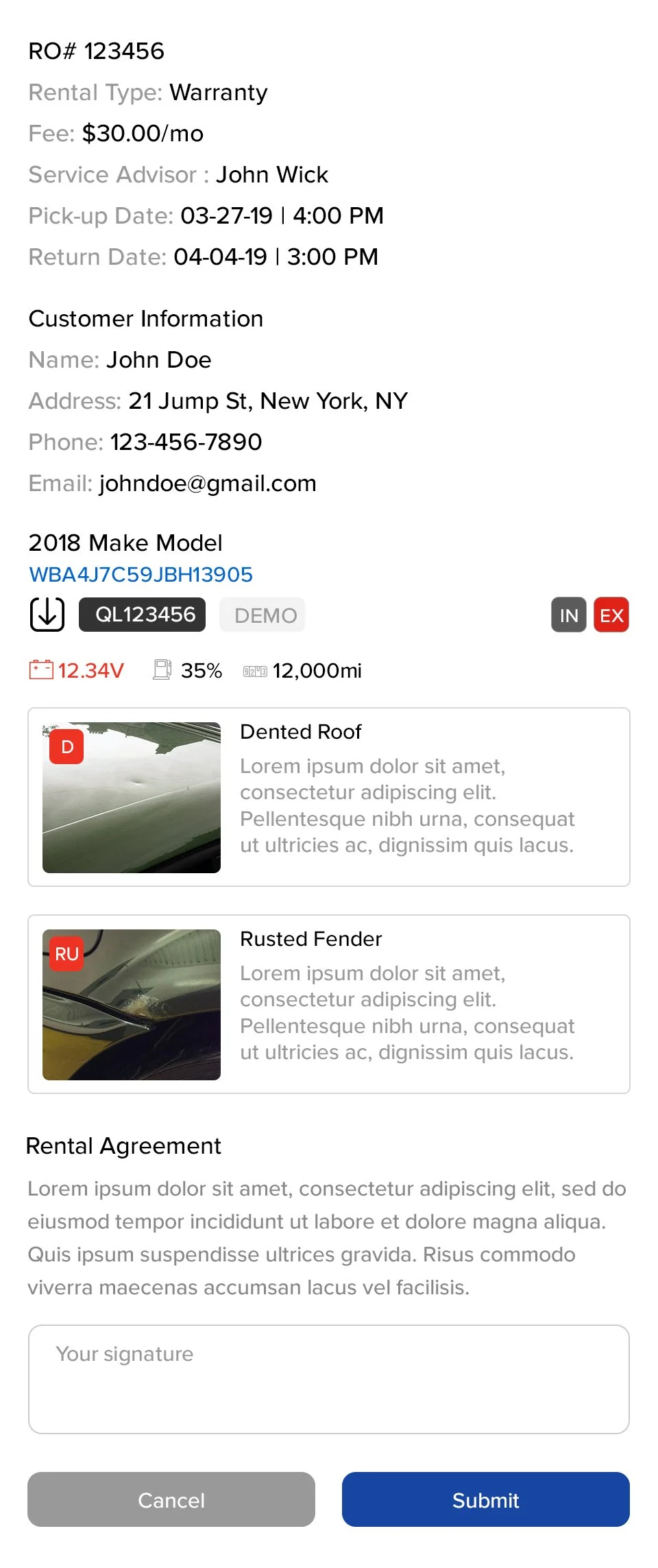
A structured, step-based flow for managing rentals end-to-end:
Setup (type, advisor, RO#)
Scheduling (pickup/drop-off)
Review and confirmation
Agreement and signature
Each step reduces complexity by focusing only on what’s needed at that moment.
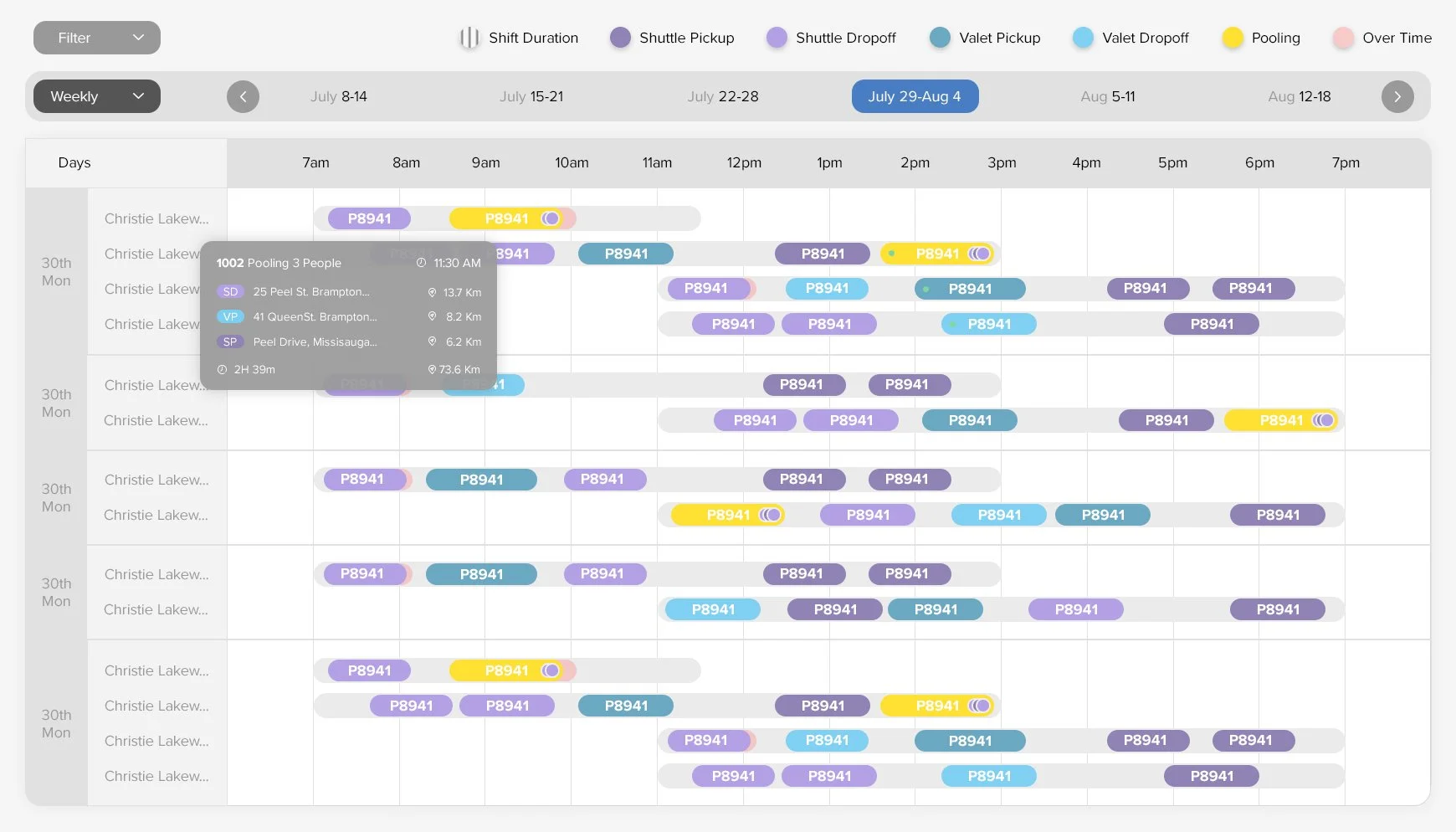
Fleet Coordination & Timeline Visibility
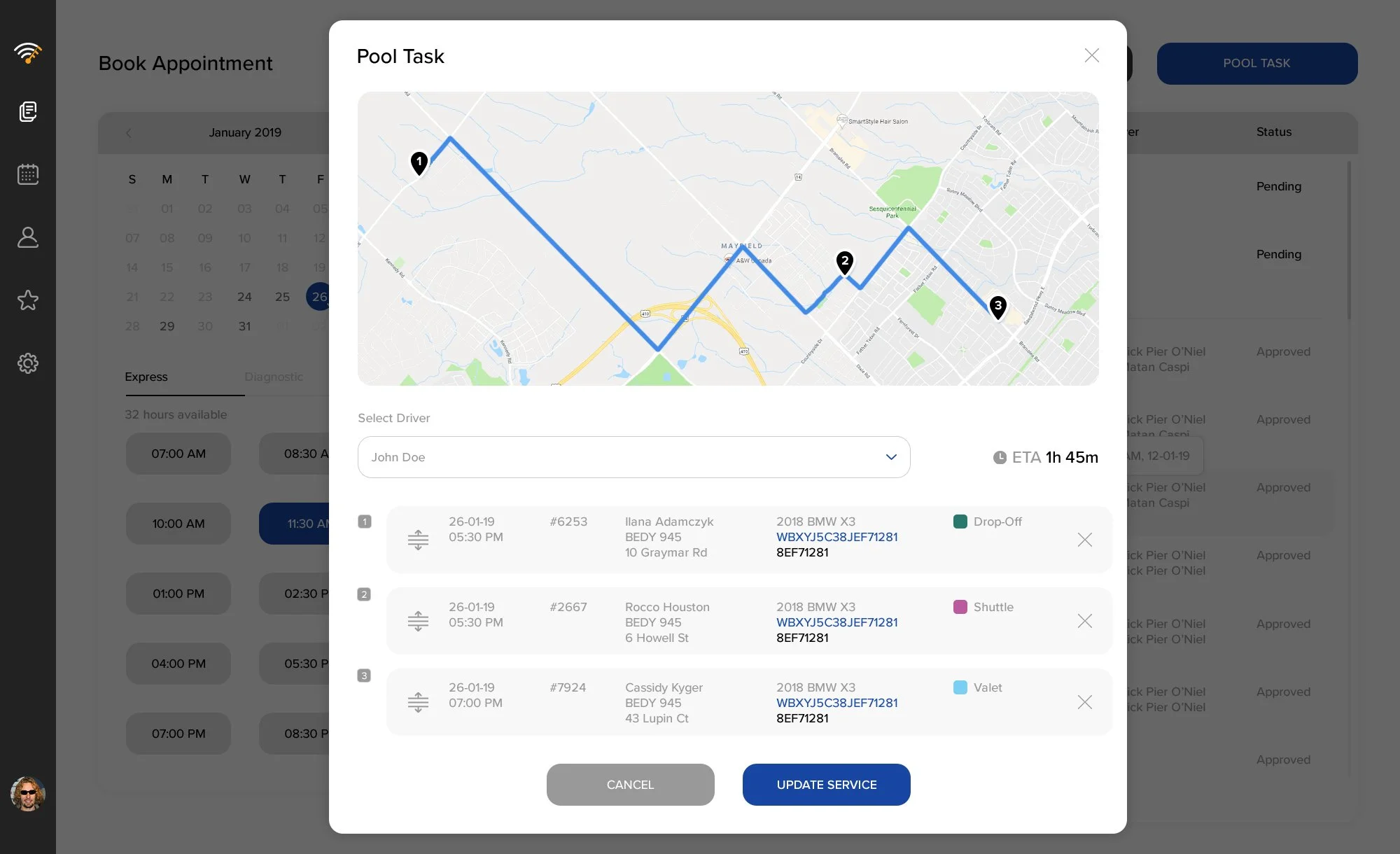
A timeline-based system for managing driver schedules, vehicle movement, and service logistics in real time.
Multi-layer scheduling across drivers and vehicles
Color-coded states for quick pattern recognition
Timeline visualization reduces coordination overhead
Hover states provide deeper operational context
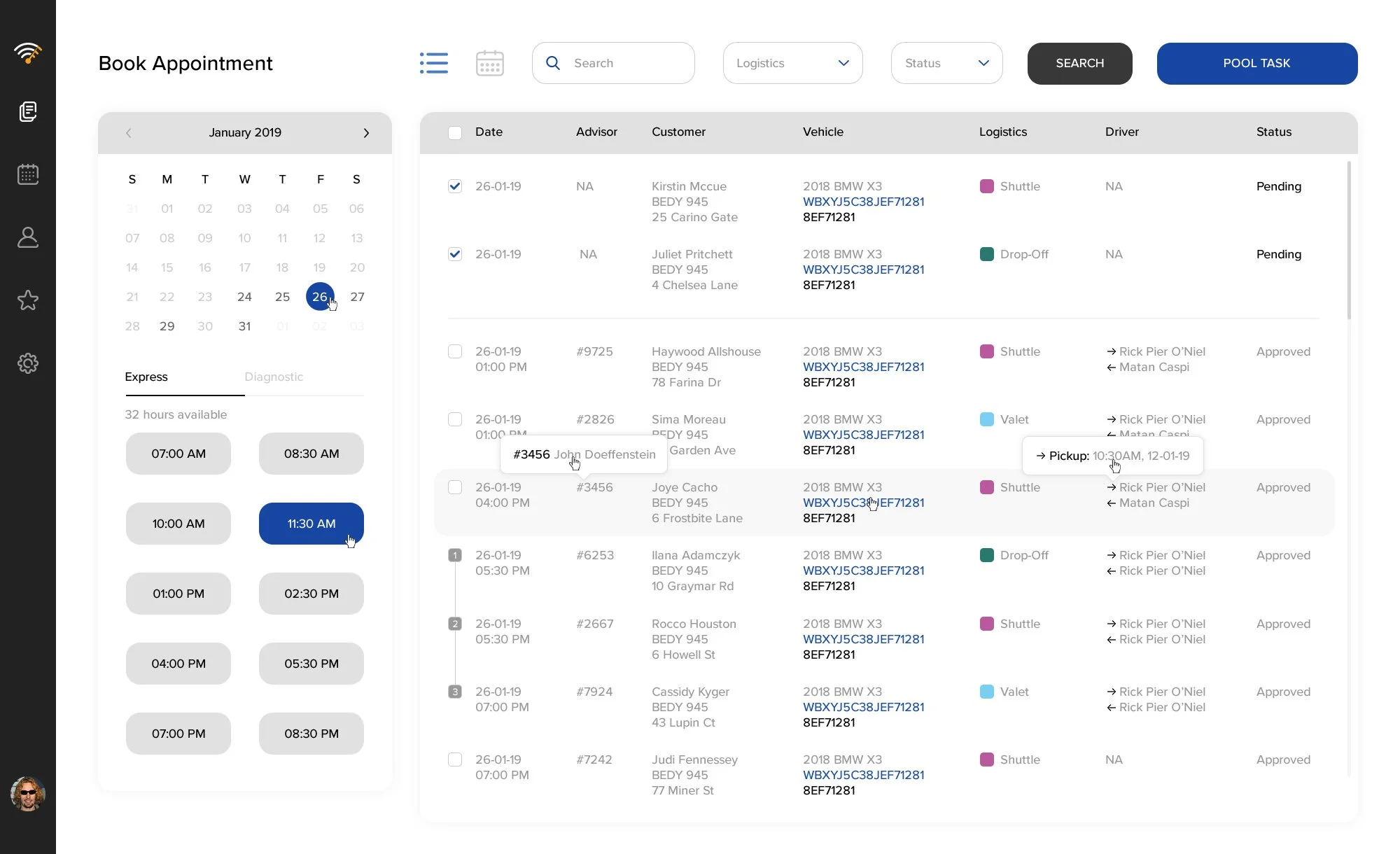
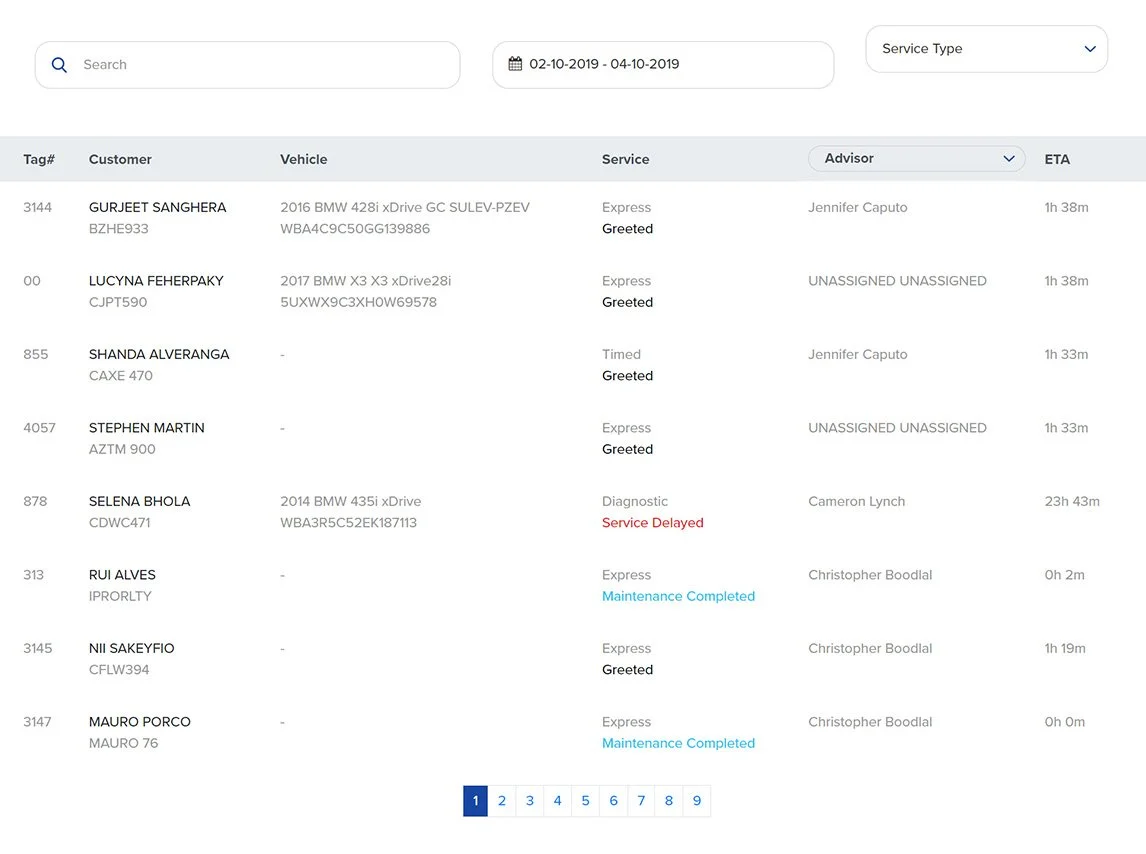
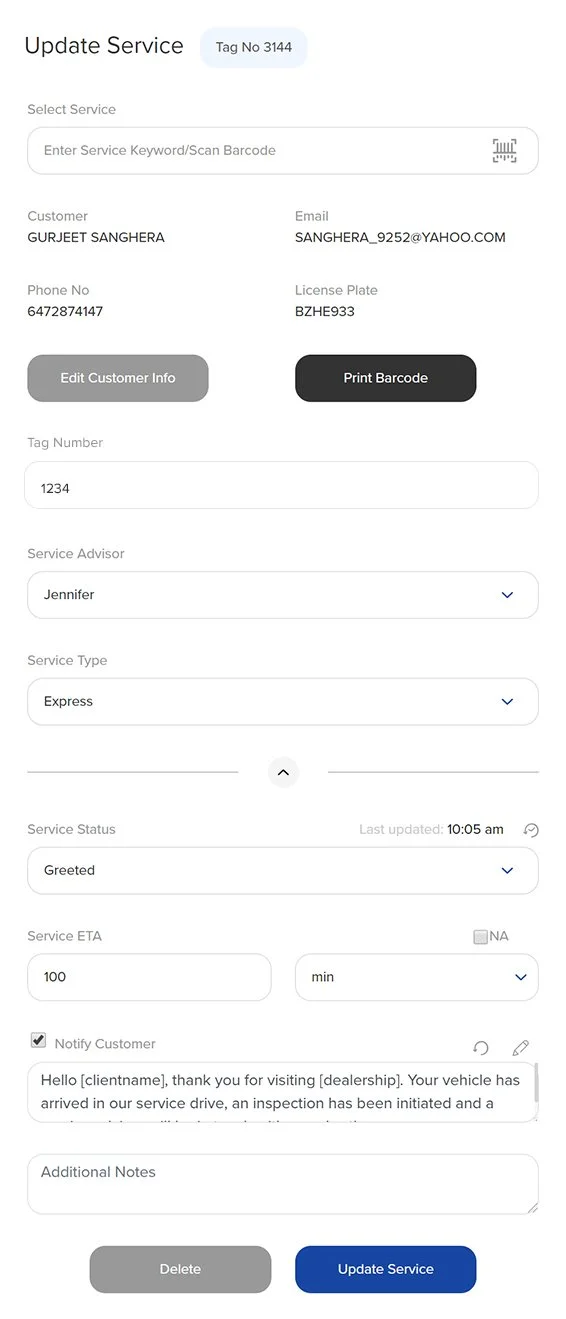
Service Scheduling & Appointment Management
A centralized interface for managing service appointments, vehicle logistics, and advisor workflows in one place.
High-density table optimized for quick scanning
Integrated scheduling with real-time availability
Embedded logistics (shuttle, valet, drop-off)
Inline actions reduce context switching
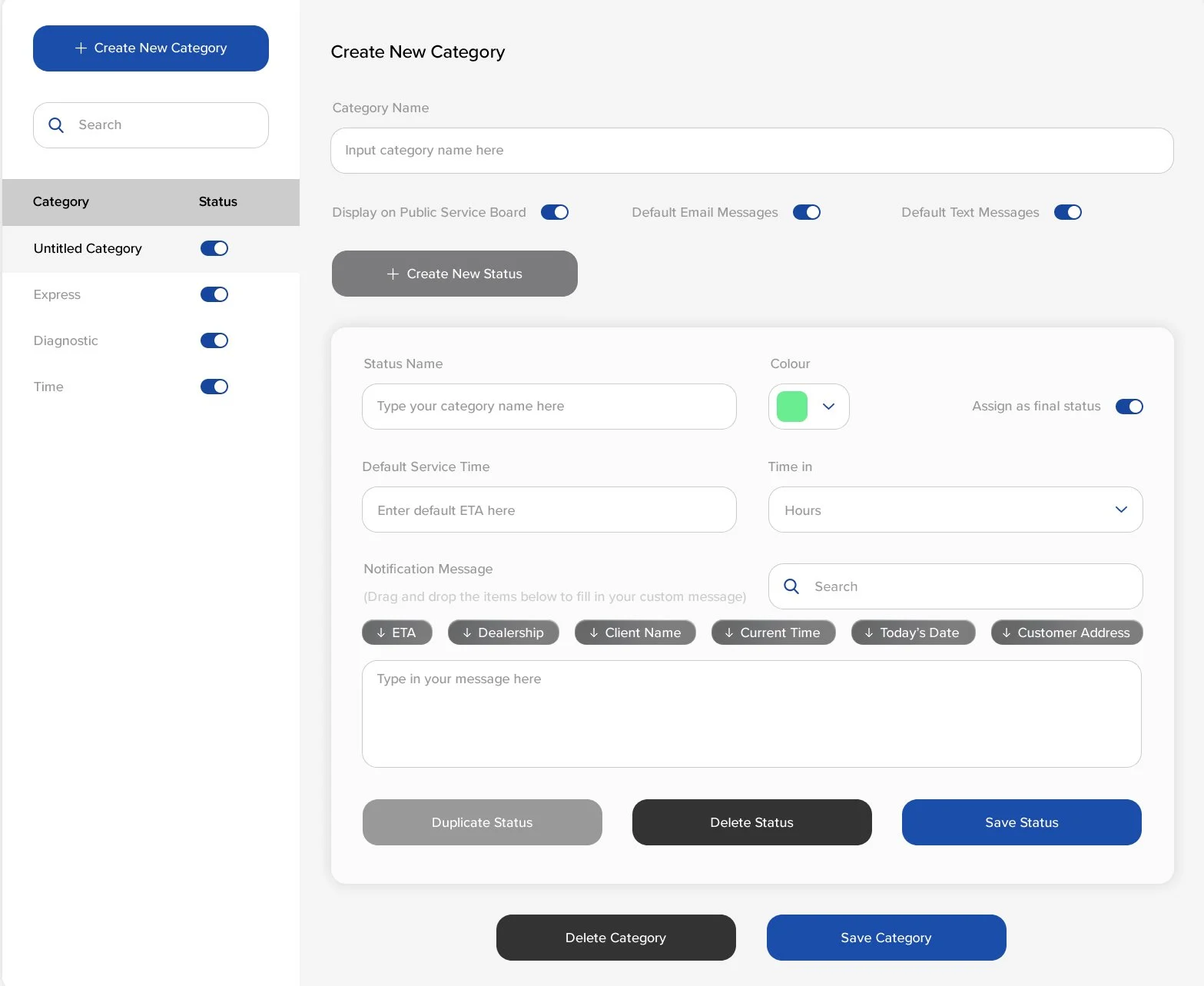
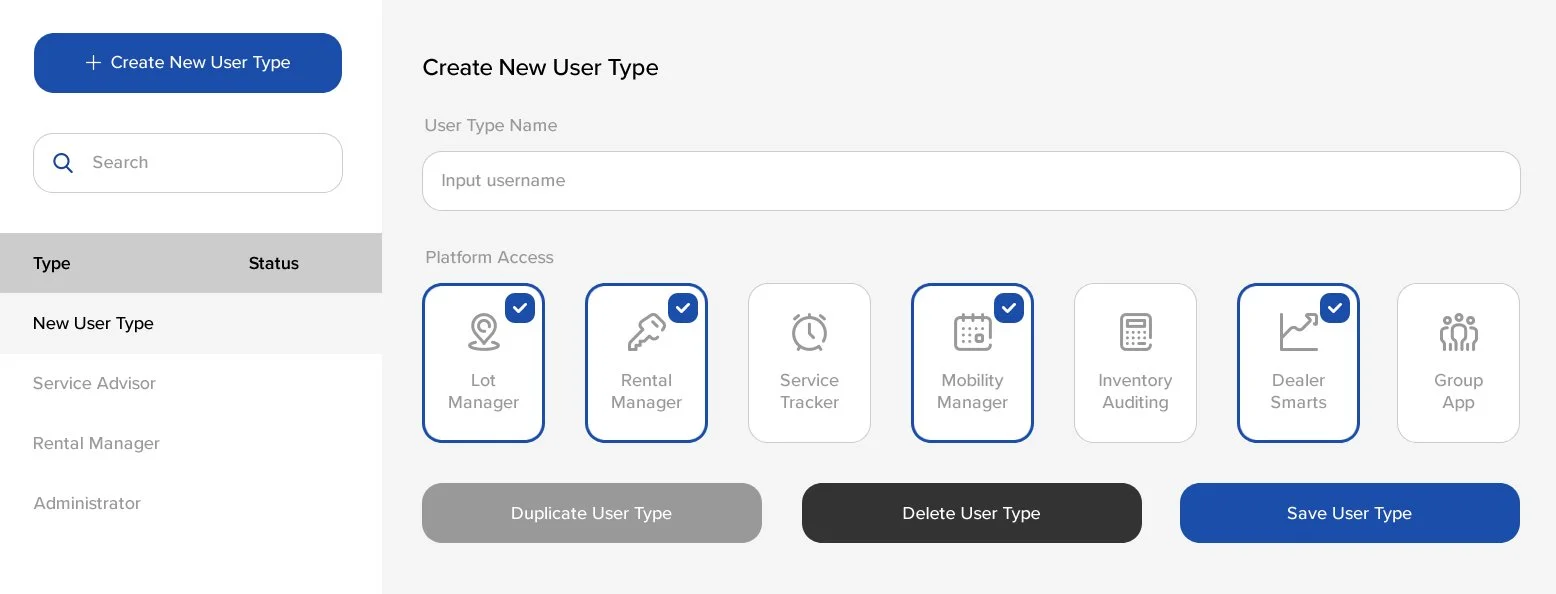
Admin & System Configuration
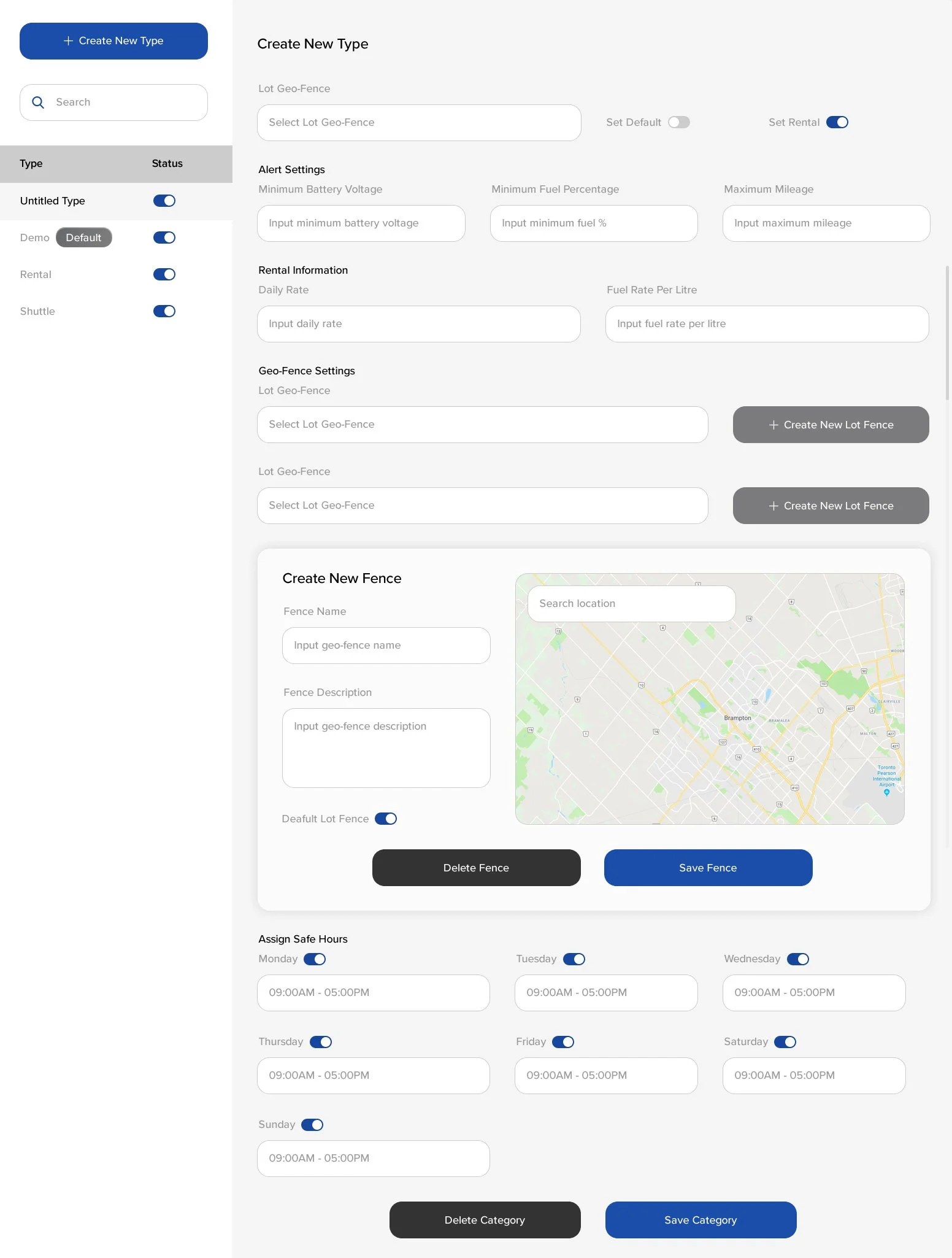
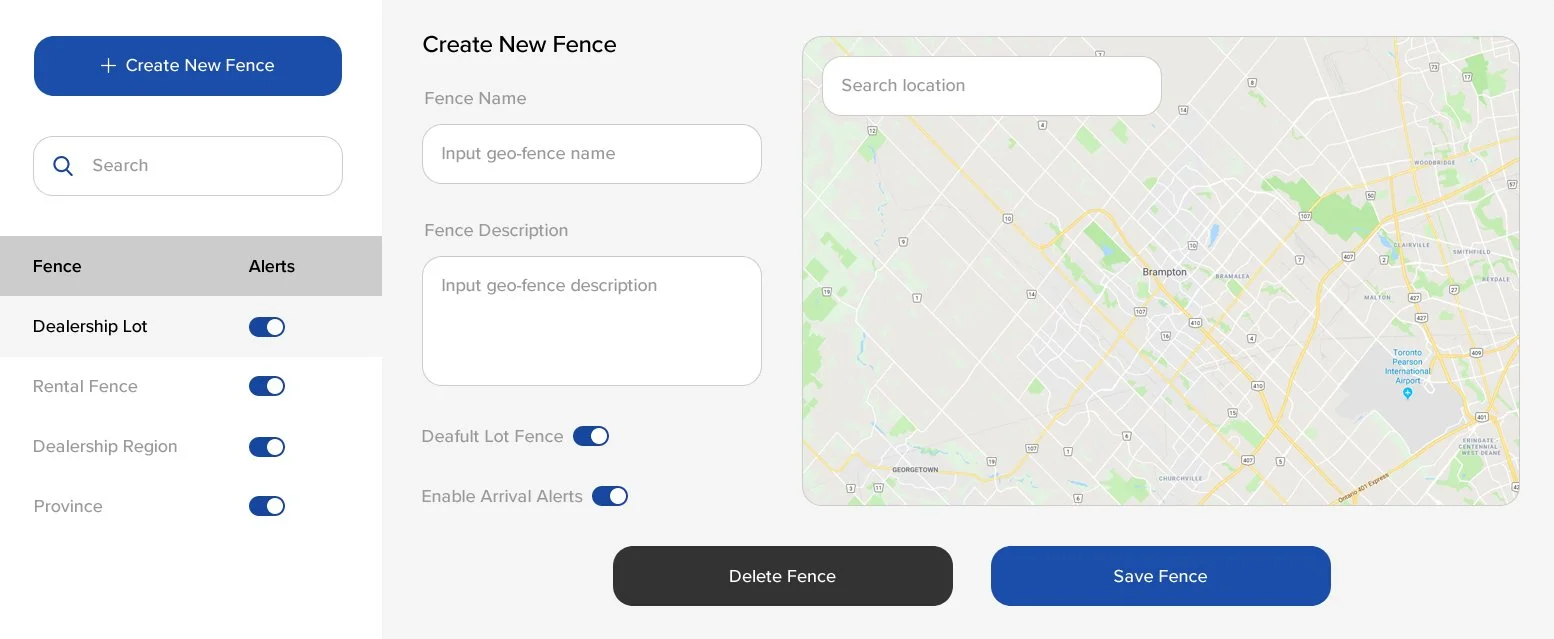
Tools to configure and scale the platform:
User roles and permissions
Vehicle types and service rules
Geo-fence and notification management
Designed to balance flexibility with usability.
What This Changed for Teams

Advisors
were able to manage appointments without switching tools
Drivers
had clearer visibility into routes and assignments
Managers
reduced manual coordination across teams
This project reinforced that operational tools don’t fail because of missing features, they fail because of how complexity is presented.
The key shift was moving from designing individual screens to designing a system of workflows.
By structuring the experience around real tasks and decisions, we were able to:
reduce cognitive load without limiting functionality
surface critical information at the right moment
create consistency across a wide range of use cases
The challenge wasn’t simplifying the product, it was making complexity usable.